Color the Connective Tissue Matrix



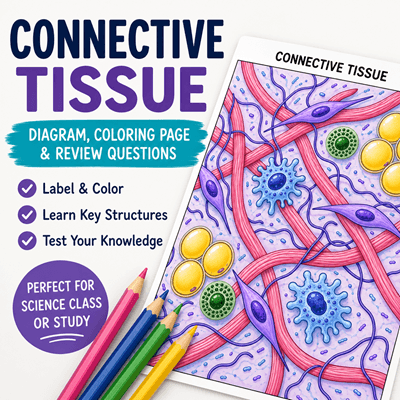
Ground Substance: This is a gel-like, amorphous material that fills the space between cells and fibers
Fibers: The fibers within the matrix provide structural support and contribute to the tissue's mechanical properties. The main types of fibers found in the matrix of connective tissue include:
-
Collagen fibers: These are the most abundant fibers and provide tensile strength to the tissue. Collagen fibers are arranged in bundles and give tissues resistance to stretching and tearing.
-
Elastic fibers: Composed of elastin and other proteins, these fibers are responsible for elasticity and recoil in tissues. They allow tissues to stretch and return to their original shape.
Various types of cells are present within the connective tissue matrix, each serving specific functions:
-
Fibroblasts: These are the most common cells found in connective tissue. Fibroblasts are responsible for producing and secreting the extracellular matrix components, including collagen, elastin, and other structural proteins. They play a central role in tissue repair and maintenance.
-
Adipocytes: These are specialized cells that store fat in the form of lipid droplets. Adipose tissue, where adipocytes are predominant, serves as an energy reservoir and also provides cushioning and insulation.
-
Macrophages: These are immune cells involved in the defense against pathogens and cellular debris. They participate in phagocytosis (engulfing and digesting foreign particles), clearing out dead cells, and secreting signaling molecules that regulate immune responses.
-
Mast Cells: These cells are involved in the body's inflammatory responses. They contain granules filled with substances like histamine, which are released in response to injury or allergens, triggering inflammation and immune reactions.
Related Resources
Case Study: The Flexible Mystery - Understanding Ehlers-Danlos Syndrome
The Biology of Skin Color HHMI | Student Guide
Notes: Chapter: Tissues | with Presentation Slides
 Wayground: Tissues
Complete Curriculum for Tissues designed for Anatomy and Physiology